
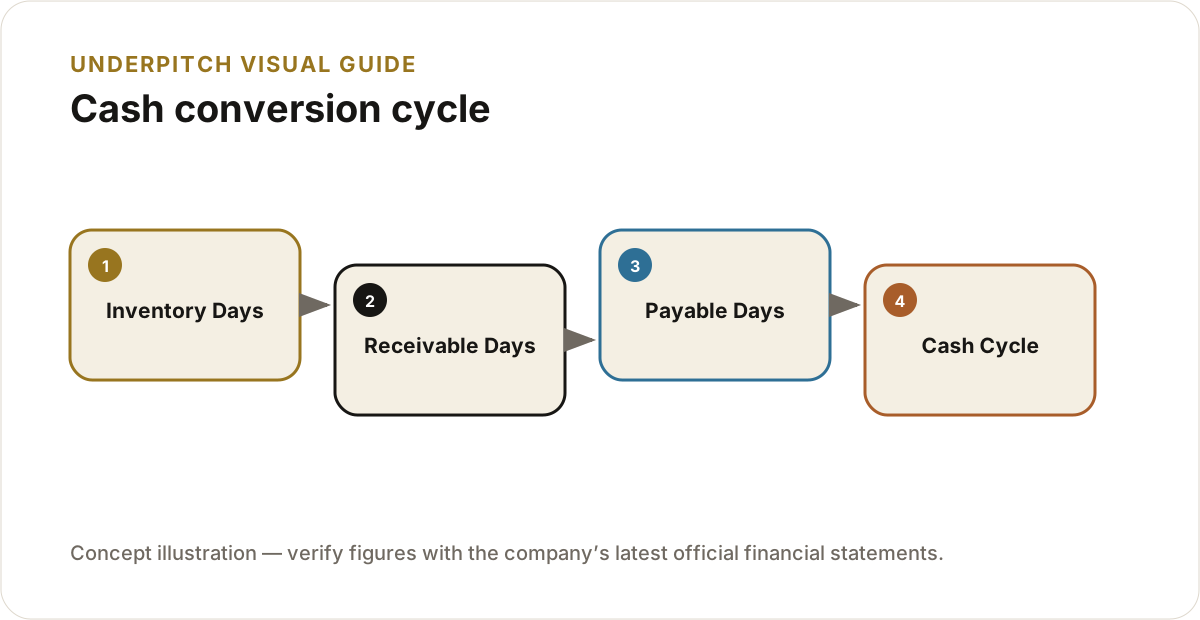
Efficiency ratios show how effectively a company uses assets and working capital. Track asset turnover, inventory days, receivable days and payable days, then combine them into the cash conversion cycle. Deterioration can signal weak demand, poor collection or channel stuffing.
Asset turnover
Measures revenue generated per rupee of assets. Capital-light and capital-intensive sectors naturally differ.
Inventory days
Shows how long inventory remains before sale. Rising days may mean expansion, seasonality or obsolete stock.
Receivable days
Estimates collection time. Compare with stated credit terms and cash-flow disclosures.
Payable days
Measures supplier credit. Longer terms can help cash flow but may indicate stress if suppliers are not paid normally.
Cash conversion cycle
Combines inventory and receivable days less payable days to estimate how long cash remains tied up in operations.
Formulas
| Metric | Simplified formula |
|---|---|
| Asset turnover | Revenue ÷ Average Total Assets |
| Inventory days | Average Inventory ÷ Cost of Goods Sold × 365 |
| Receivable days | Average Trade Receivables ÷ Revenue × 365 |
| Payable days | Average Trade Payables ÷ Purchases or COGS × 365 |
| Cash conversion cycle | Inventory Days + Receivable Days − Payable Days |
Use average balance-sheet values where appropriate and confirm definitions used by the company or data provider.
How to use this in company analysis
- Calculate at least three to five years of history.
- Compare the company with relevant peers using consistent definitions.
- Read notes to accounts and management commentary behind unusual movements.
- Reconcile profit, balance-sheet growth and operating cash flow.
- Do not make a buy or sell decision from one ratio.
Important limitations
- Accounting policies and exceptional items can reduce comparability.
- Sector economics determine what is normal or risky.
- Quarterly values may be seasonal and unaudited.
- Financial companies require sector-specific metrics.
Educational information only. It is not a personalised investment, tax, accounting or buy/sell recommendation. Verify figures from the company’s latest official filings.