
A balance sheet is a snapshot of a company’s assets, liabilities and shareholders’ equity on a particular date. Start with the accounting equation, then examine liquidity, debt, working capital, asset quality, contingent liabilities and changes across several years rather than judging one number in isolation.
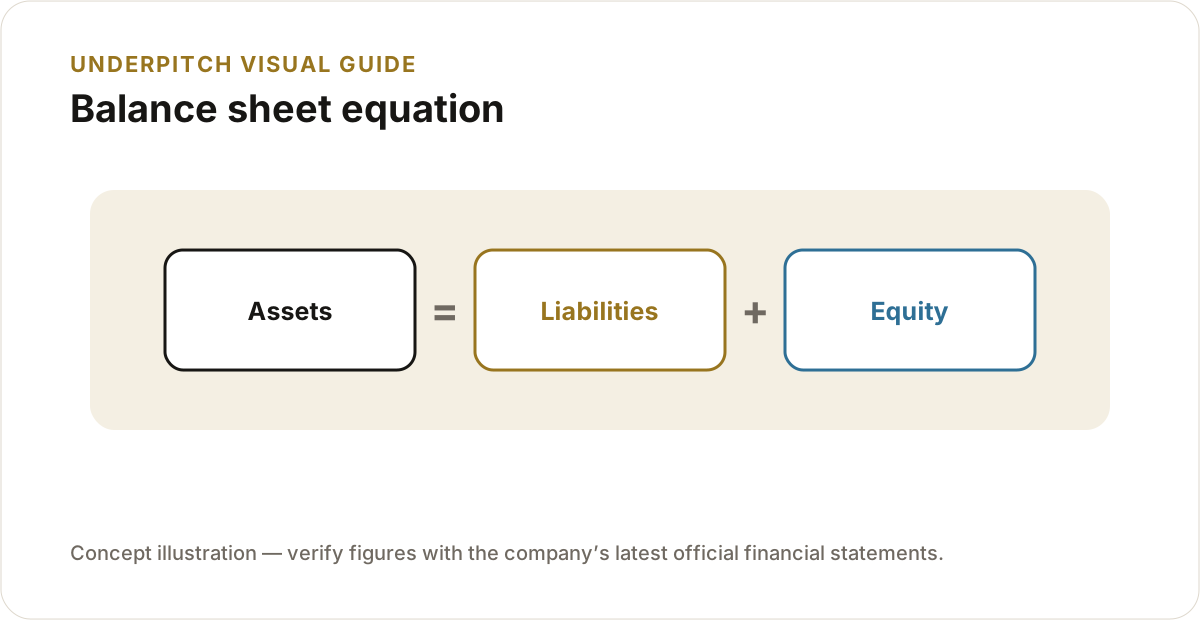
The accounting equation
Assets = Liabilities + Shareholders’ Equity. Assets show resources controlled by the company, liabilities show obligations, and equity is the residual interest after liabilities.
Current and non-current items
Current items generally turn into cash or become payable within the operating cycle or 12 months. Non-current items include long-term assets, borrowings and obligations.
Working capital
Working capital = Current Assets − Current Liabilities. Positive working capital can support operations, but excessive inventory or slow receivables may signal poor cash conversion.
Asset quality
Compare receivables, inventory, goodwill, capital work-in-progress and related-party balances with revenue and cash flow. Large unexplained increases deserve investigation.
Formulas
| Metric | Simplified formula |
|---|---|
| Accounting equation | Assets = Liabilities + Shareholders’ Equity |
| Working capital | Current Assets − Current Liabilities |
| Net debt | Total Borrowings − Cash and Cash Equivalents |
Use average balance-sheet values where appropriate and confirm definitions used by the company or data provider.
How to use this in company analysis
- Calculate at least three to five years of history.
- Compare the company with relevant peers using consistent definitions.
- Read notes to accounts and management commentary behind unusual movements.
- Reconcile profit, balance-sheet growth and operating cash flow.
- Do not make a buy or sell decision from one ratio.
Important limitations
- Accounting policies and exceptional items can reduce comparability.
- Sector economics determine what is normal or risky.
- Quarterly values may be seasonal and unaudited.
- Financial companies require sector-specific metrics.
Educational information only. It is not a personalised investment, tax, accounting or buy/sell recommendation. Verify figures from the company’s latest official filings.