
The cash flow statement tracks actual cash movement through operations, investing and financing. Focus on operating cash conversion, capital expenditure, free cash flow, acquisitions, debt changes and dividends. Persistent profit without operating cash flow is a serious warning sign.
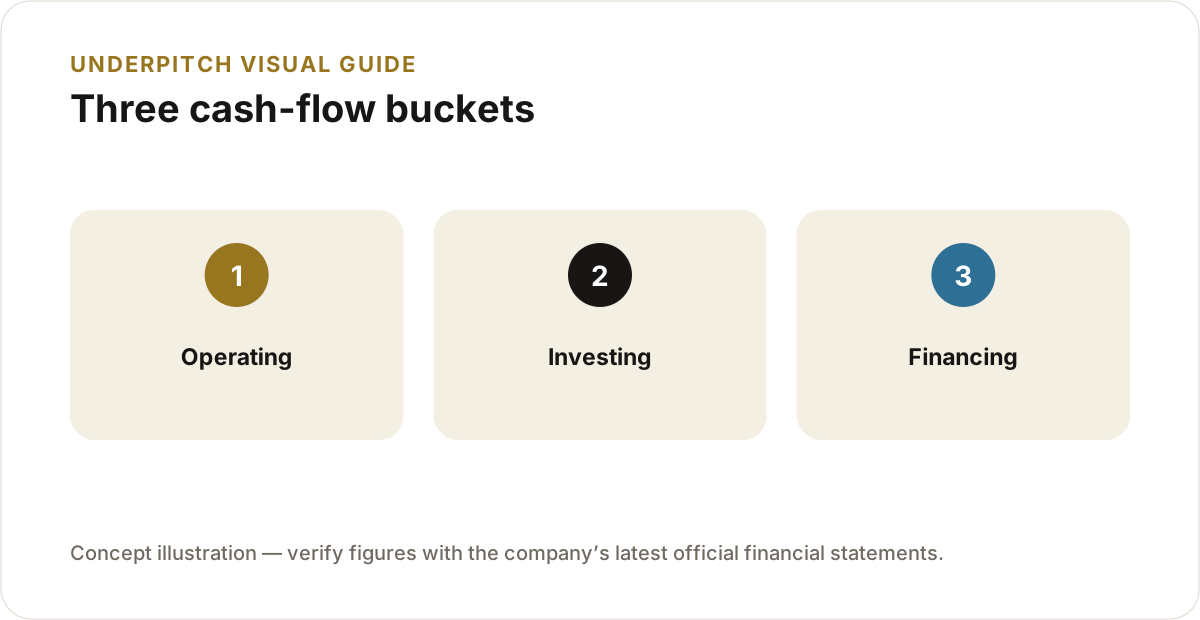
Operating cash flow
Starts from profit and adjusts for non-cash items and working-capital movements. Compare CFO with net profit over several years.
Investing cash flow
Includes capital expenditure, asset sales, acquisitions and investments. Negative investing cash flow can be healthy when it funds productive growth.
Financing cash flow
Shows borrowings, repayments, equity issuance, buybacks, dividends and lease payments. It explains how growth and distributions are financed.
Free cash flow
Free cash flow broadly equals operating cash flow less capital expenditure. Definitions differ, so use a consistent method.
Cash conversion warnings
Watch for receivables or inventory absorbing cash, repeated capitalised costs, supplier financing and one-off working-capital releases.
Formulas
| Metric | Simplified formula |
|---|---|
| Free cash flow | Cash Flow from Operations − Capital Expenditure |
| Cash conversion | Cash Flow from Operations ÷ Net Profit |
| Net change in cash | Operating Cash Flow + Investing Cash Flow + Financing Cash Flow |
Use average balance-sheet values where appropriate and confirm definitions used by the company or data provider.
How to use this in company analysis
- Calculate at least three to five years of history.
- Compare the company with relevant peers using consistent definitions.
- Read notes to accounts and management commentary behind unusual movements.
- Reconcile profit, balance-sheet growth and operating cash flow.
- Do not make a buy or sell decision from one ratio.
Important limitations
- Accounting policies and exceptional items can reduce comparability.
- Sector economics determine what is normal or risky.
- Quarterly values may be seasonal and unaudited.
- Financial companies require sector-specific metrics.
Educational information only. It is not a personalised investment, tax, accounting or buy/sell recommendation. Verify figures from the company’s latest official filings.