
Leverage ratios show how much debt a company uses and whether earnings and cash flow can service it. Examine debt-to-equity, net debt, debt/EBITDA, interest coverage, debt-service coverage, maturity schedules, security, currency and covenant risk. Sector context is essential.
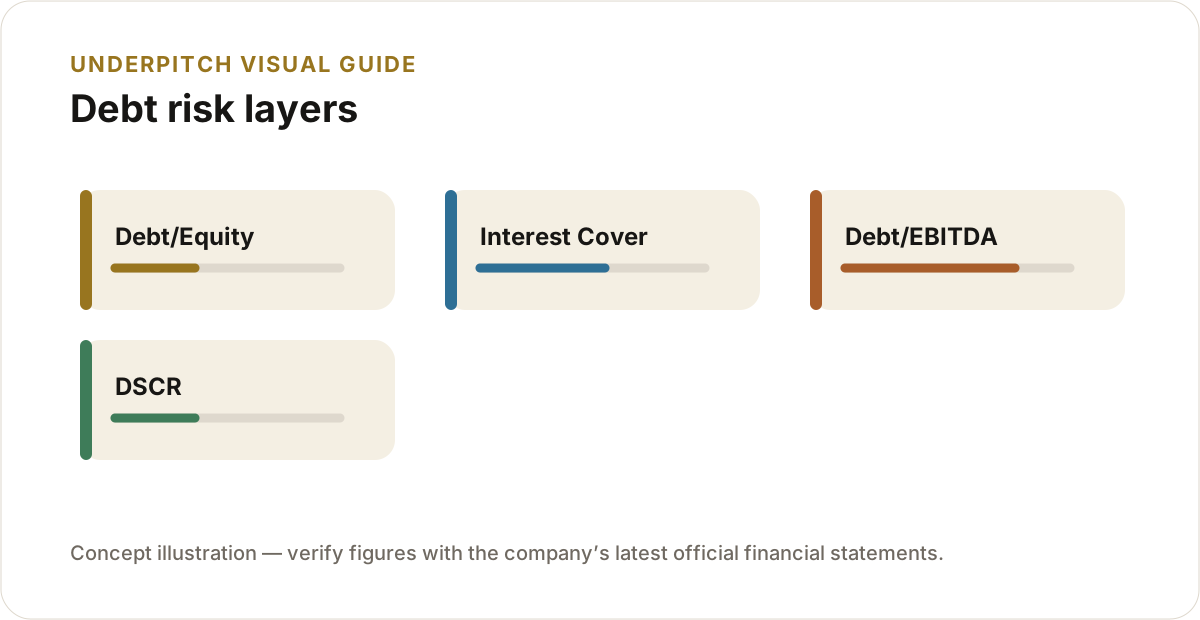
Debt-to-equity
Compares borrowings with shareholder capital but can be distorted by negative or unusually low equity.
Net debt
Subtracts cash from debt. Restricted cash and operating cash needs may not be fully available for repayment.
Interest coverage
Shows how many times operating profit covers finance cost. Cyclical profits can cause rapid deterioration.
Debt/EBITDA
Approximates leverage relative to operating earnings, but EBITDA is not cash and excludes capital expenditure.
DSCR and maturity
Debt-service coverage includes principal and interest obligations. Always check when debt falls due and whether refinancing is assumed.
Formulas
| Metric | Simplified formula |
|---|---|
| Debt-to-equity | Total Borrowings ÷ Shareholders’ Equity |
| Net debt | Total Debt − Cash and Cash Equivalents |
| Interest coverage | EBIT ÷ Finance Cost |
| Net debt/EBITDA | Net Debt ÷ EBITDA |
| DSCR | Cash available for debt service ÷ Principal and Interest due |
Use average balance-sheet values where appropriate and confirm definitions used by the company or data provider.
How to use this in company analysis
- Calculate at least three to five years of history.
- Compare the company with relevant peers using consistent definitions.
- Read notes to accounts and management commentary behind unusual movements.
- Reconcile profit, balance-sheet growth and operating cash flow.
- Do not make a buy or sell decision from one ratio.
Important limitations
- Accounting policies and exceptional items can reduce comparability.
- Sector economics determine what is normal or risky.
- Quarterly values may be seasonal and unaudited.
- Financial companies require sector-specific metrics.
Educational information only. It is not a personalised investment, tax, accounting or buy/sell recommendation. Verify figures from the company’s latest official filings.