
Market capitalisation is the market value of a company’s equity, calculated using share price and outstanding shares. Enterprise value estimates the value of the operating business available to all capital providers by adding debt and other claims and subtracting cash. A ₹20 share can be more expensive than a ₹2,000 share.
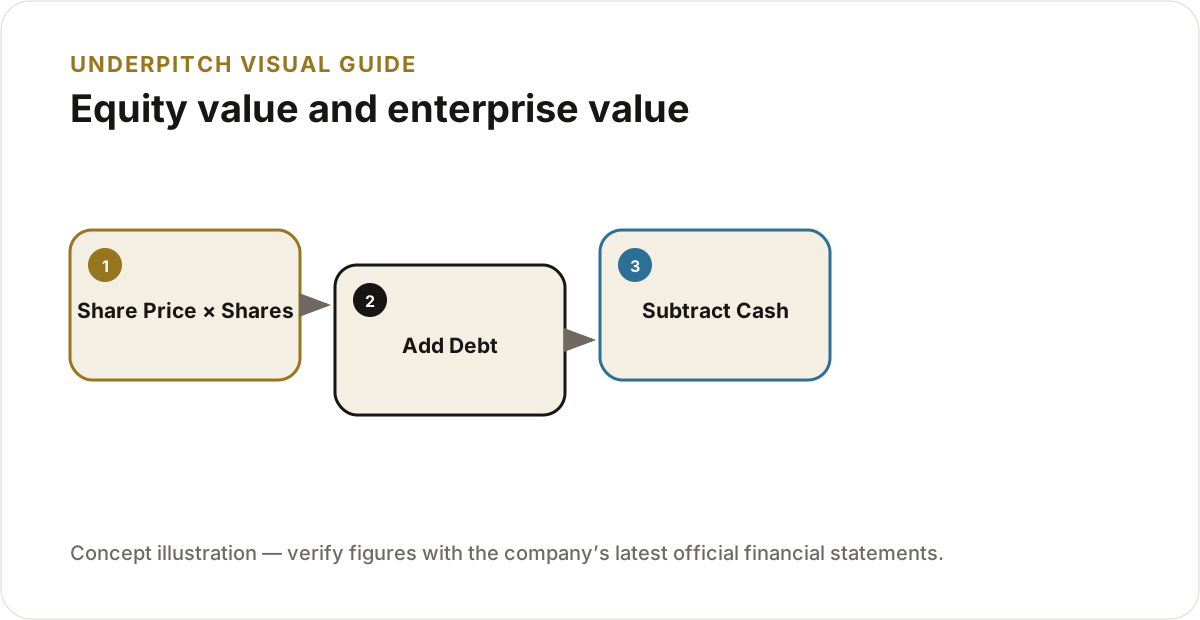
Market capitalisation
Use fully diluted shares where relevant. Promoter ownership does not reduce market cap; all outstanding equity is valued at the market price.
Enterprise value
EV is useful when comparing businesses with different debt and cash levels. Adjustments may include lease liabilities, minority interest and investments.
Free float
Free-float market cap considers shares readily available for public trading and is often used in index construction.
Limitations
Market value changes continuously, while balance-sheet debt and cash are periodic. Financial companies require different valuation approaches.
Formulas
| Metric | Simplified formula |
|---|---|
| Market capitalisation | Current Share Price × Outstanding Equity Shares |
| Enterprise value | Market Cap + Total Debt + Minority Interest + Preferred Capital − Cash and Cash Equivalents |
| Free-float market cap | Market Cap × Free-float Factor |
Use average balance-sheet values where appropriate and confirm definitions used by the company or data provider.
How to use this in company analysis
- Calculate at least three to five years of history.
- Compare the company with relevant peers using consistent definitions.
- Read notes to accounts and management commentary behind unusual movements.
- Reconcile profit, balance-sheet growth and operating cash flow.
- Do not make a buy or sell decision from one ratio.
Important limitations
- Accounting policies and exceptional items can reduce comparability.
- Sector economics determine what is normal or risky.
- Quarterly values may be seasonal and unaudited.
- Financial companies require sector-specific metrics.
Educational information only. It is not a personalised investment, tax, accounting or buy/sell recommendation. Verify figures from the company’s latest official filings.