
Equity basics
Ownership, cash-market investing, derivatives, risk, compounding, bonus issues, stock splits and the practical path to investing through IIFL.
What is equity?
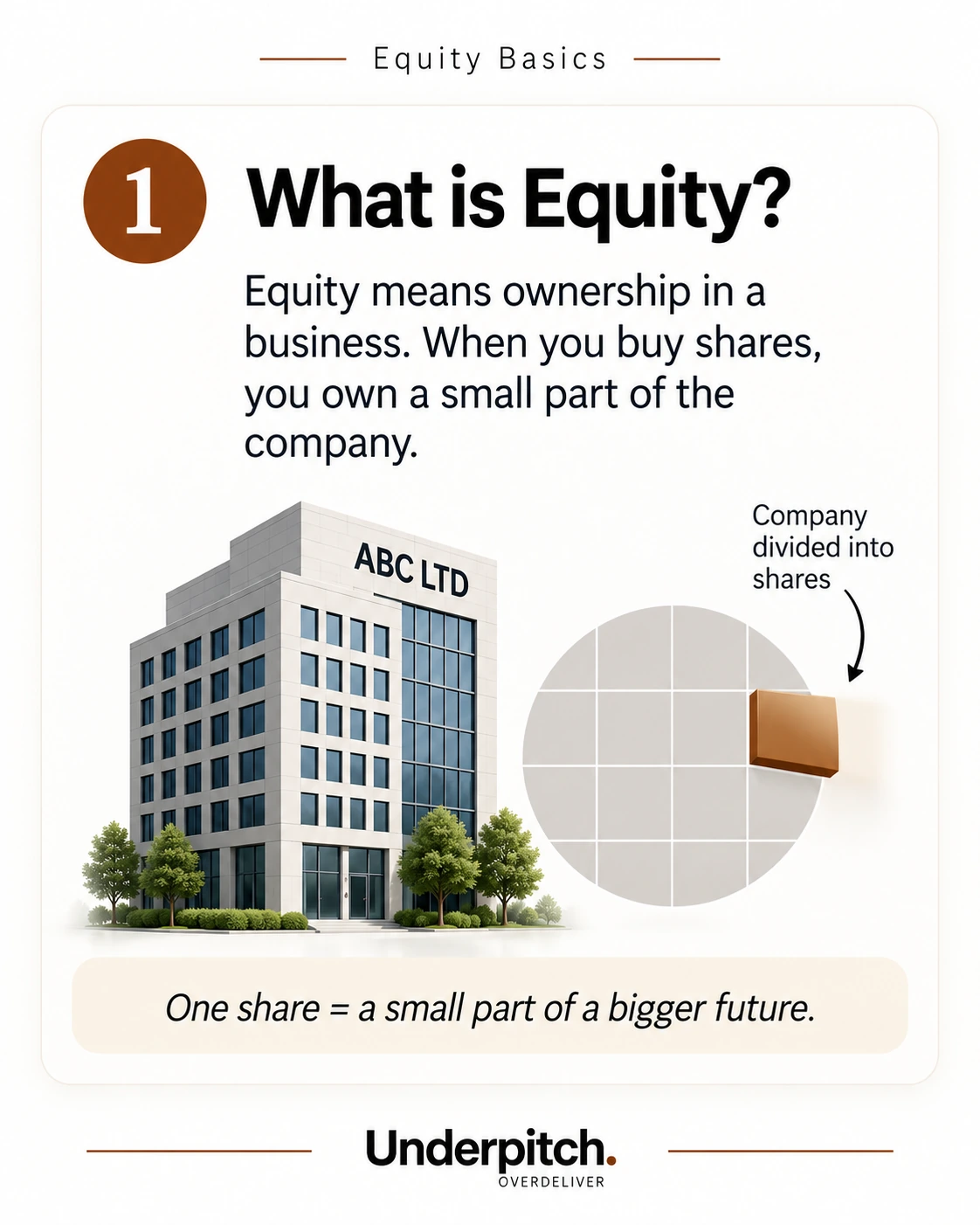
Equity means ownership in a business. When a company is divided into shares and you buy those shares, you own a small part of that company. Your return depends on how the business performs, how the market values it and any dividends the company pays.
- Share: one unit of ownership.
- Shareholder: a person or entity that owns shares.
- Market price: the price buyers and sellers agree on in the market.
How can you earn from equity?
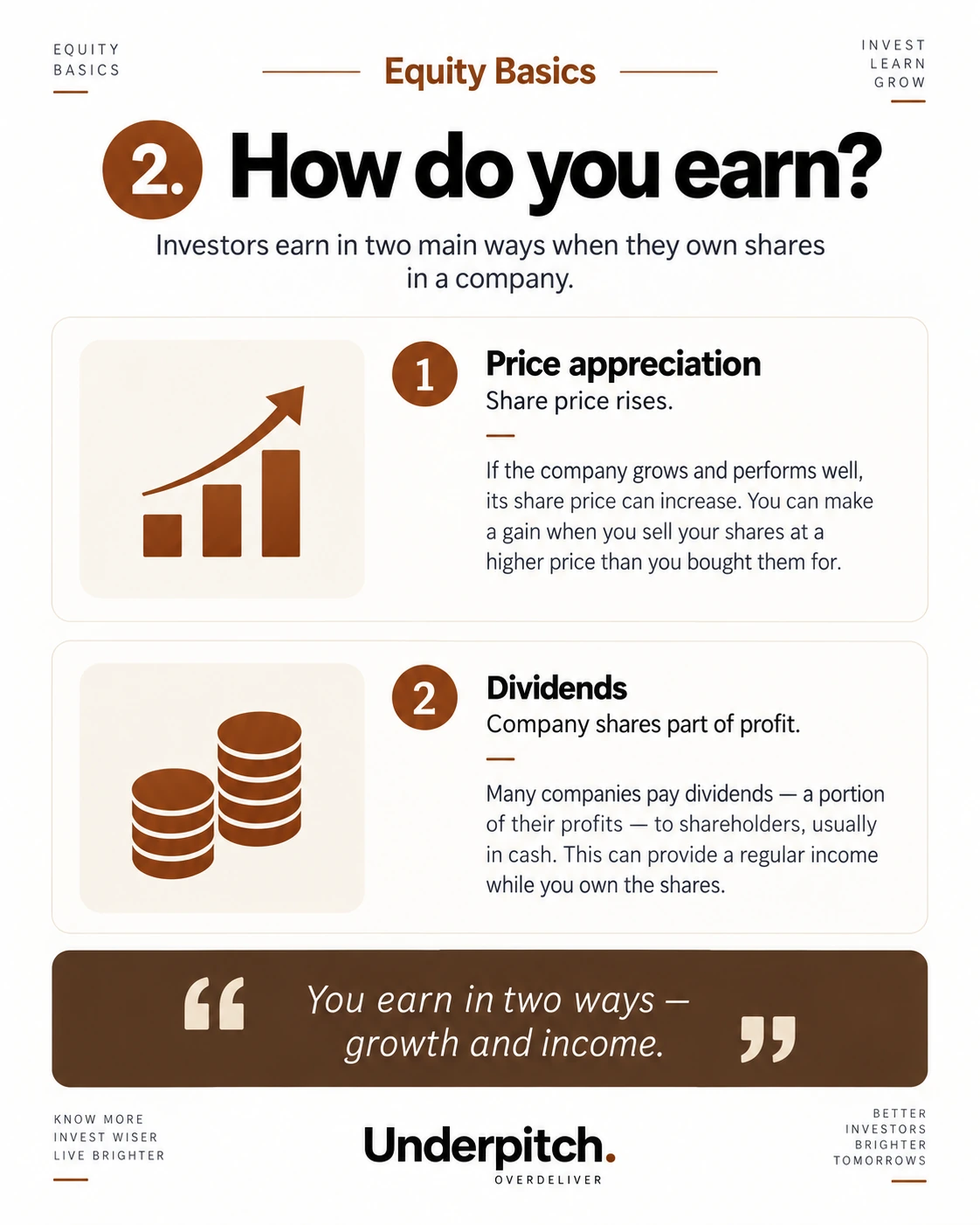
There are two main ways shareholders may earn: price appreciation and dividends. Price appreciation happens when the share price rises above your purchase price. A dividend is a distribution a company may make from profits or reserves. Neither is guaranteed.
A company can grow strongly and still give a poor investment result if you buy at an excessive valuation, so business quality and purchase price both matter.
A simple equity example
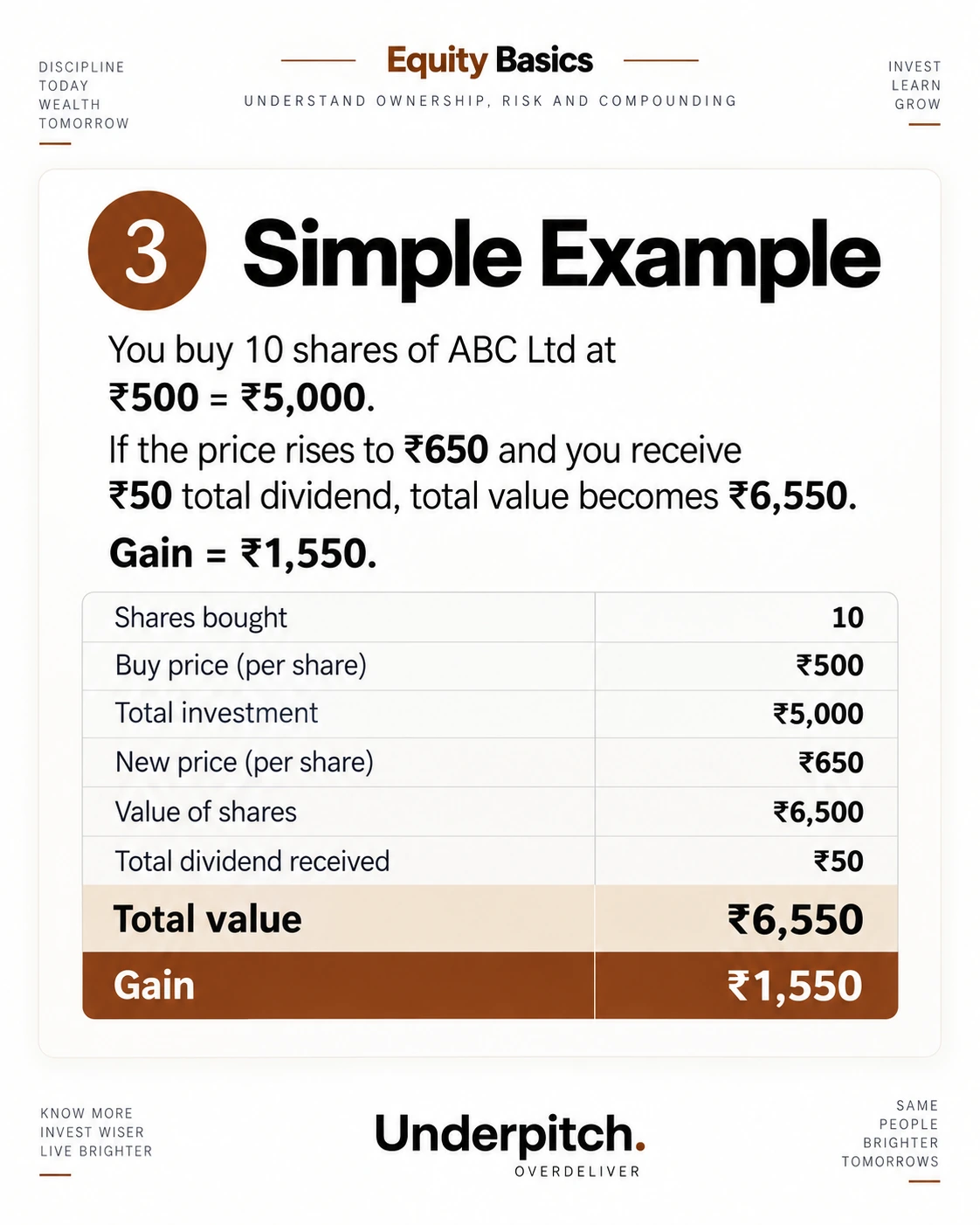
Suppose you buy 10 shares at ₹500 each, so your investment is ₹5,000. Later, the share price becomes ₹650 and you receive a ₹50 total dividend. Your holding is then worth ₹6,500 plus ₹50 dividend, a total of ₹6,550. The illustrative gain is ₹1,550 before taxes and charges.
What does risk mean in equity?
Risk means the possibility that the actual result is worse than expected, including a permanent loss of capital. Equity risk is not only daily price movement.
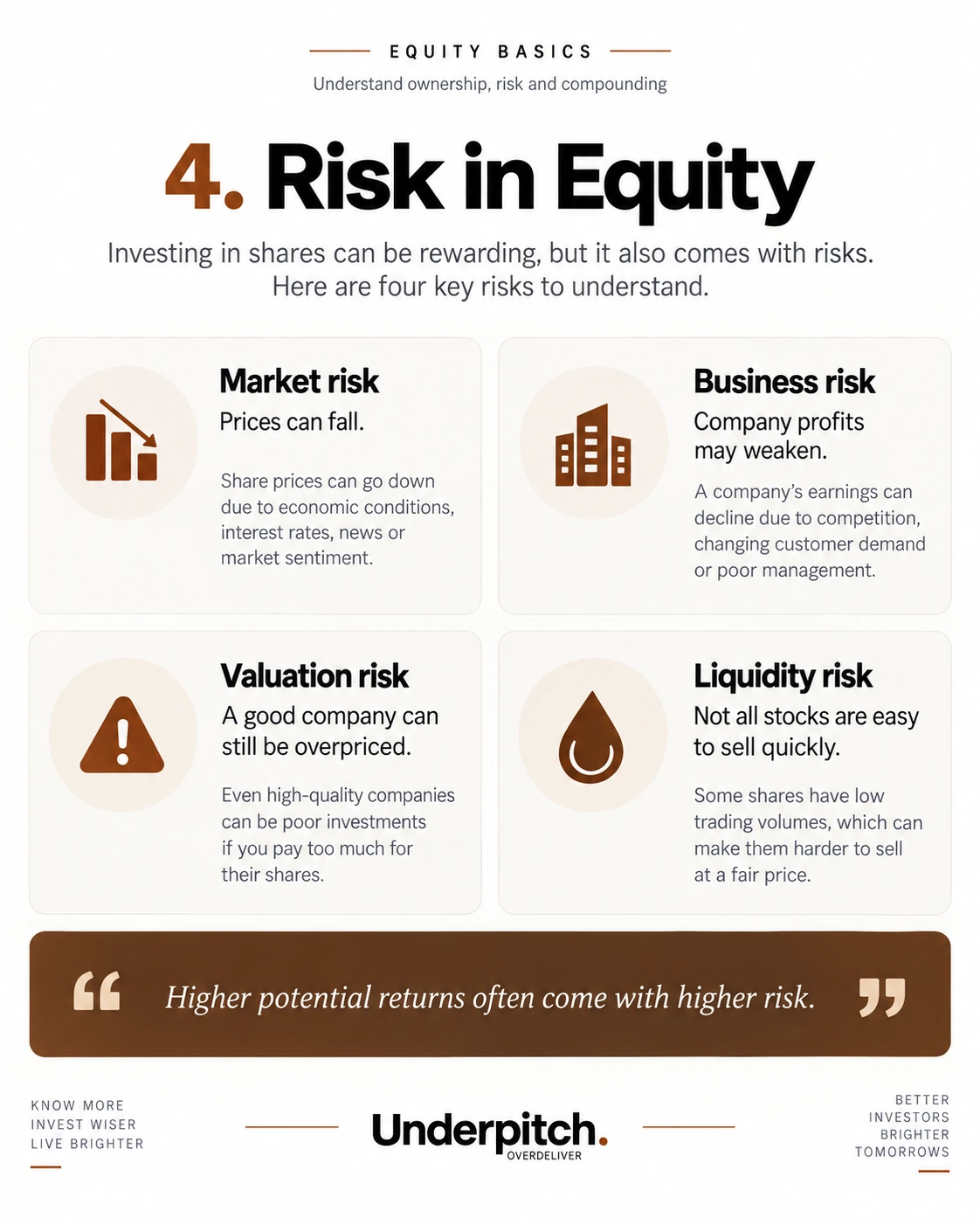
- Market risk: the overall market can fall.
- Business risk: profits, competition, debt or governance can deteriorate.
- Valuation risk: a good company bought too expensively can still disappoint.
- Liquidity risk: you may not be able to exit quickly at a fair price.
- Concentration risk: too much money in one stock or sector increases dependence on one outcome.
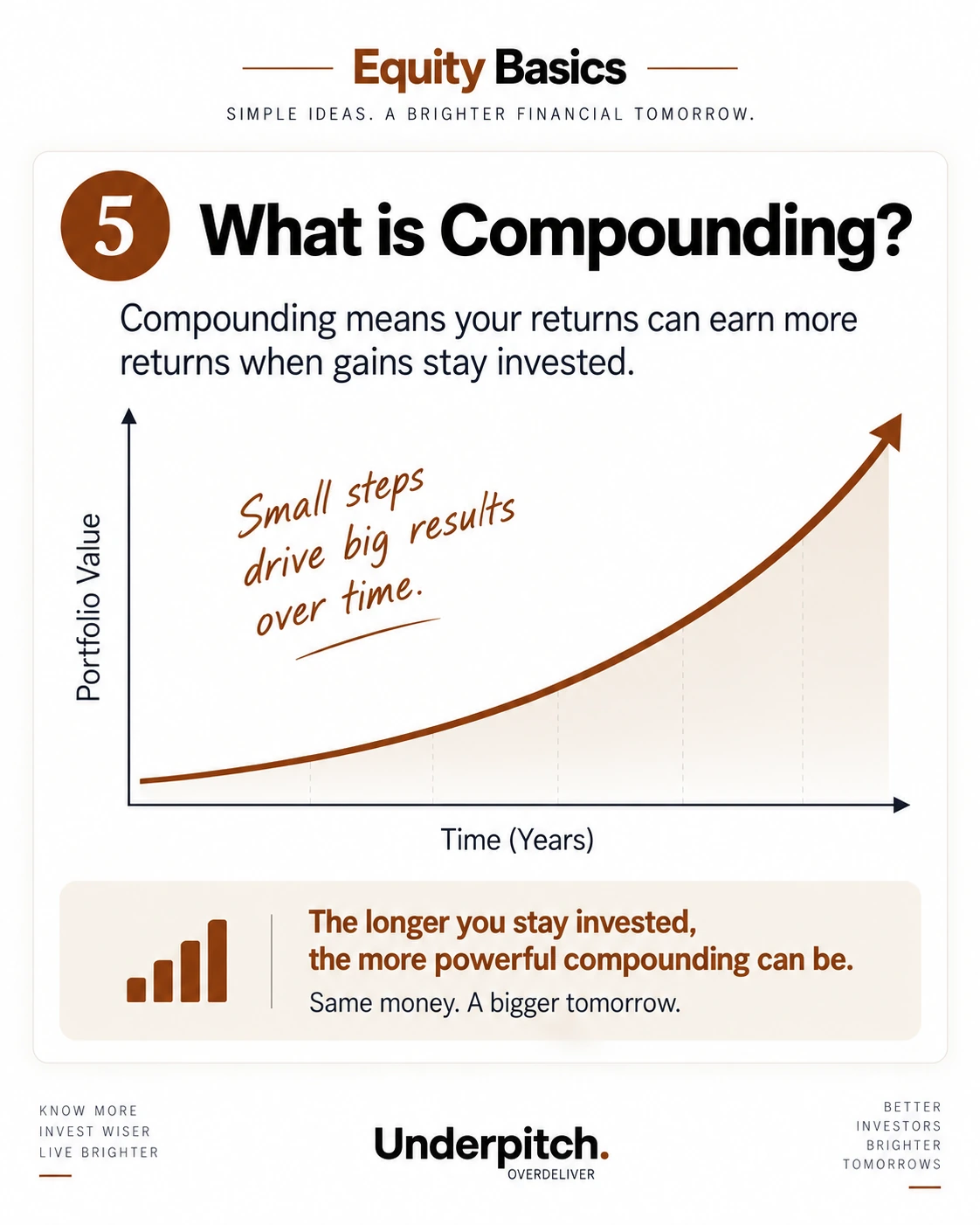
What is compounding?
Compounding means returns remain invested so future returns can be earned on both your original capital and earlier gains. Time is a major part of compounding, but the path is never smooth in equities.
Future value = Principal × (1 + return)^years
The longer the holding period, the more powerful compounding can become — but losses compound too, so risk control matters.
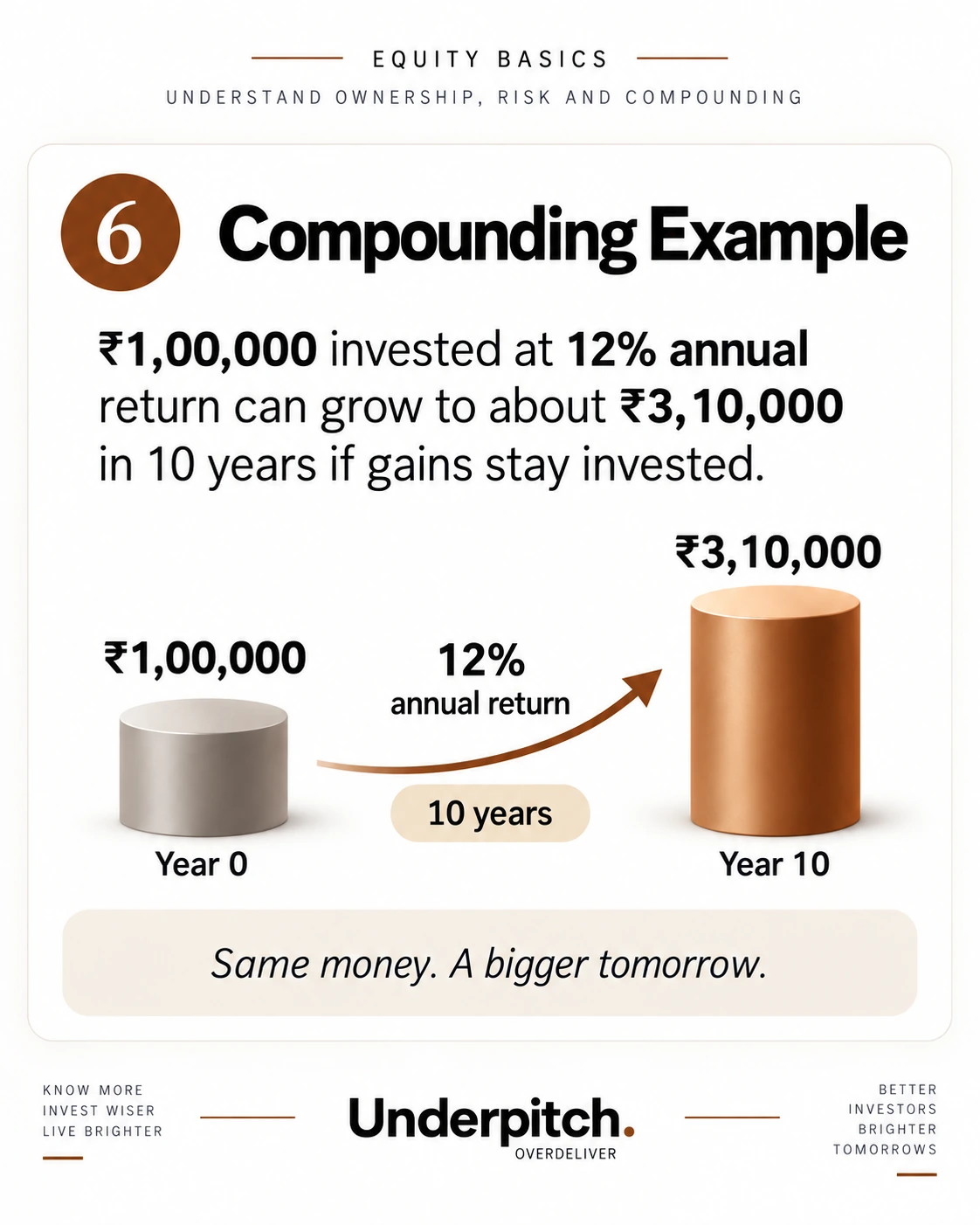
Compounding example
Illustration only: ₹1,00,000 compounded at 12% annually would be about ₹3.11 lakh after 10 years. Real market returns vary every year and can be negative; 12% is only an assumption for learning.
Compounding works best when an investor avoids unnecessary interruptions, keeps costs and taxes in mind and stays invested in suitable assets for an appropriate period.
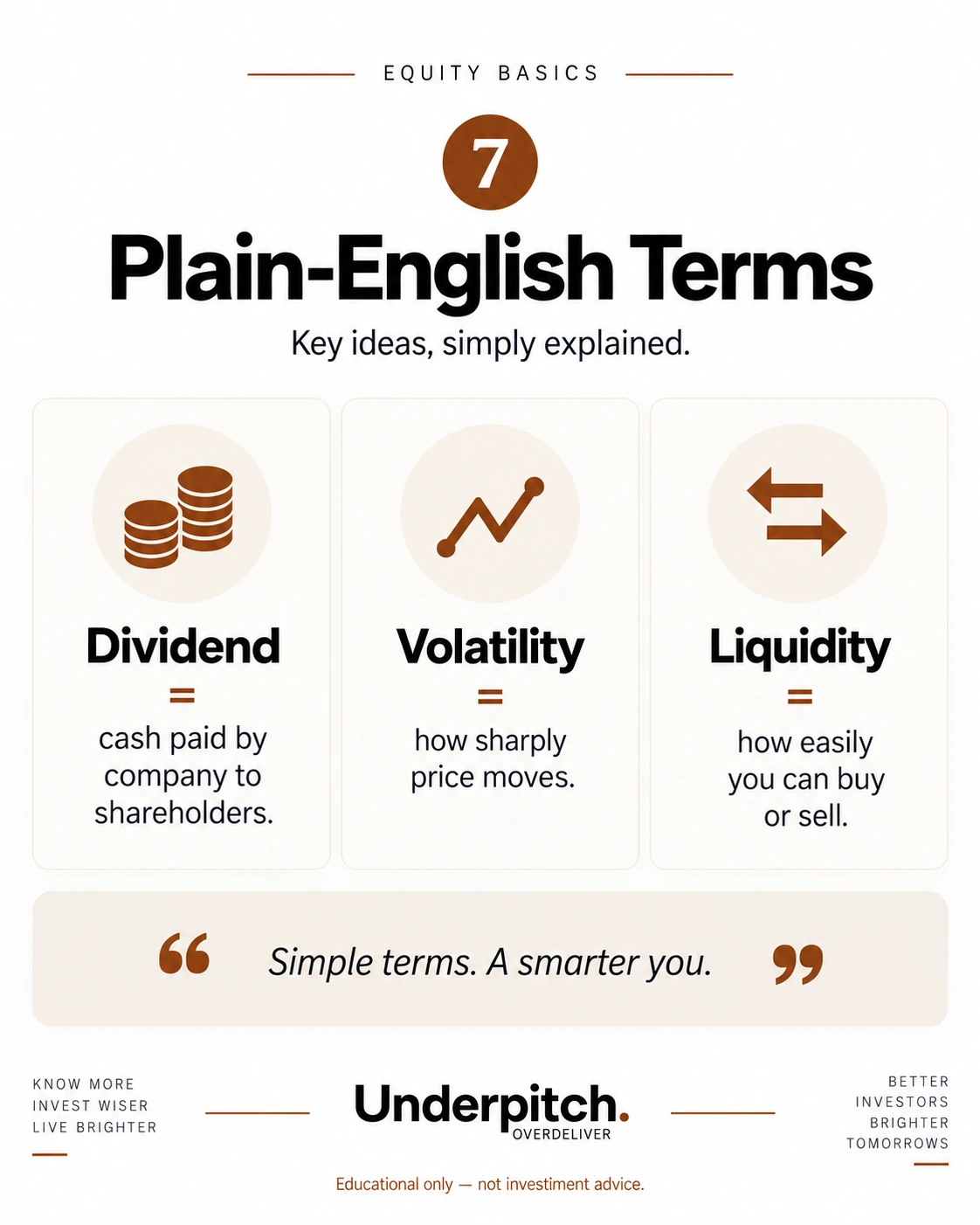
Plain-English equity terms
Cash market: delivery and intraday
Delivery
You buy actual shares and, after settlement, they are credited to your Demat account. There is no expiry date. You can hold them for days or decades.
Intraday
You buy and sell on the same trading day without taking delivery. Intraday is trading, not long-term ownership, and it has separate tax treatment in India.
Derivatives: futures and options
A derivative gets its value from an underlying stock or index. Futures create an obligation and are traded with margin. Options give the buyer a right while the seller takes an obligation. Both have expiry dates.
Leverage means controlling a larger exposure with a smaller amount of cash or margin. It magnifies both gains and losses. An option buyer can lose the entire premium. Futures and option sellers can face losses far larger than the initial margin.
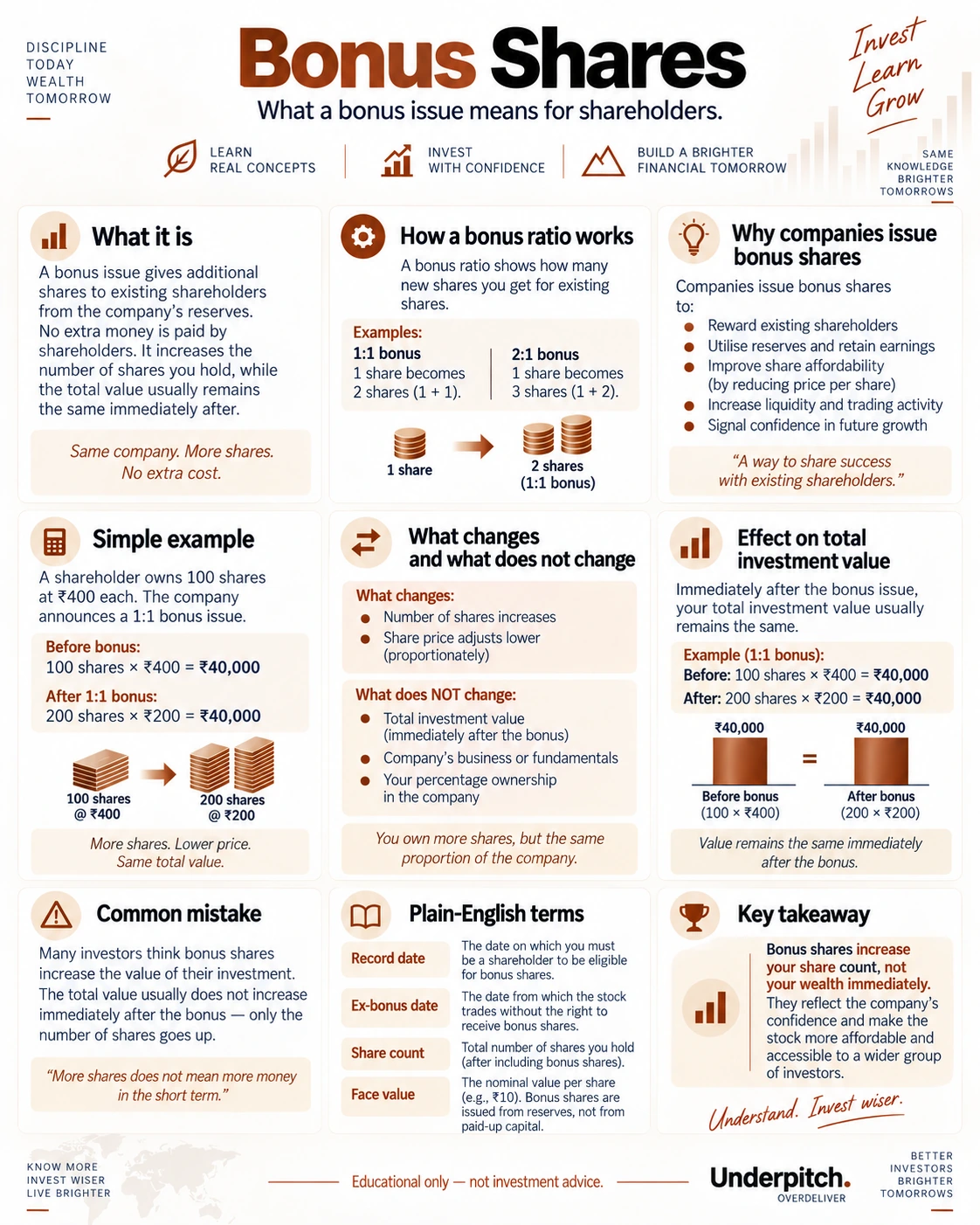
Bonus shares and stock splits
Bonus issue
A company issues extra shares to existing shareholders, for example 1:1. If you own 100 shares and receive a 1:1 bonus, you hold 200 shares. The market price normally adjusts, so your wealth does not double merely because the share count doubled.
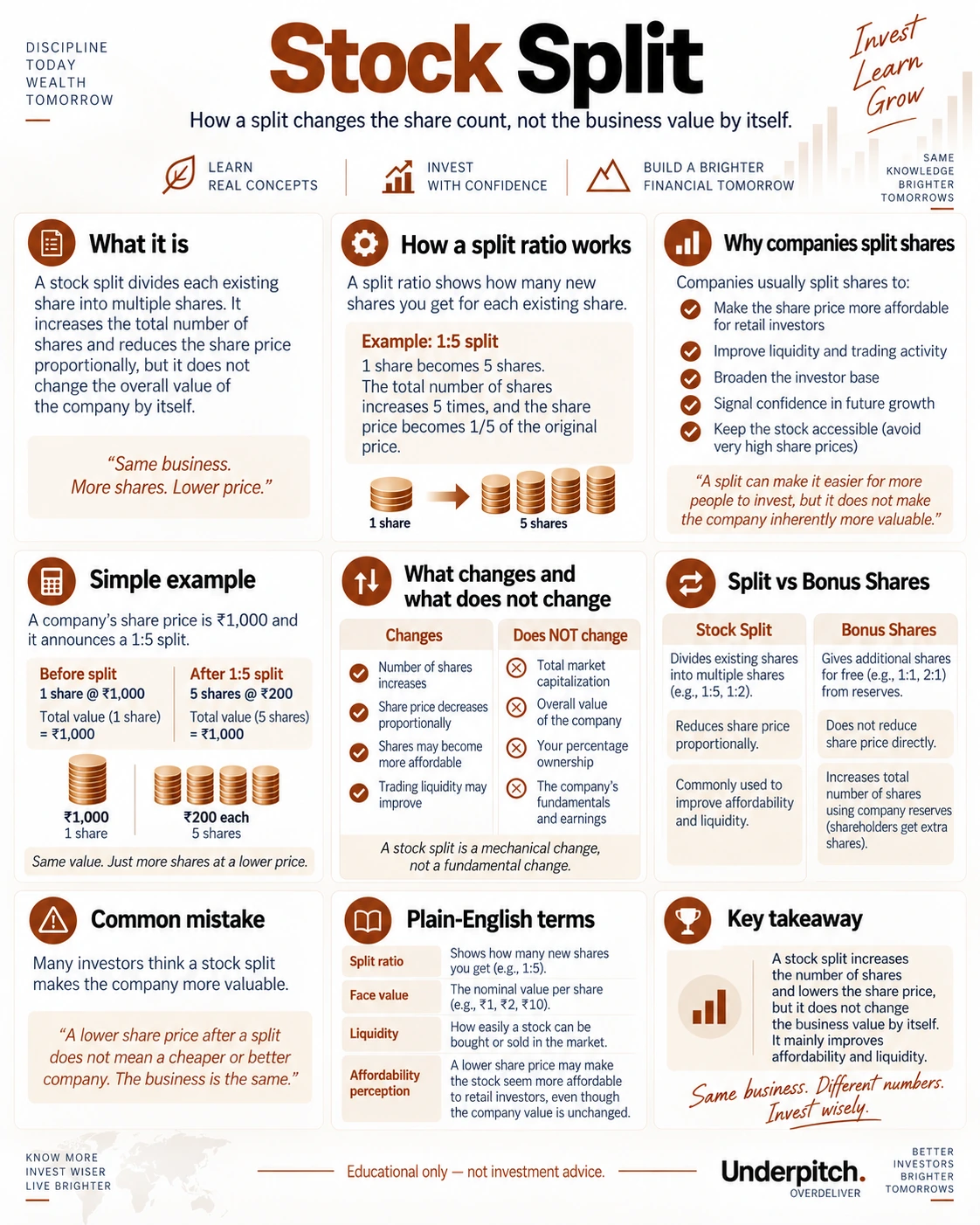
Stock split
A split divides each share into more shares, such as one ₹10 face-value share becoming five ₹2 face-value shares. The market price adjusts proportionately; the business itself is not suddenly more valuable.
How to invest through IIFL
Use the Underpitch IIFL reference link below to begin account opening. Complete KYC, link your bank account, set nominee details and activate only the segments you understand. For delivery investing, add funds, search the security, research the business and valuation, choose quantity and order type, review charges, and place the order.