Major technical theories
Dow Theory, Elliott Wave 1-2-3-4-5 + A-B-C, Wyckoff, support/resistance, trend, volume and mean-reversion theory with practical interpretation.
Technical theories are frameworks, not laws
These theories help organize market behaviour. None can guarantee future price. The most useful approach is to combine structure, confirmation and risk management instead of treating a theory as a mechanical prediction.
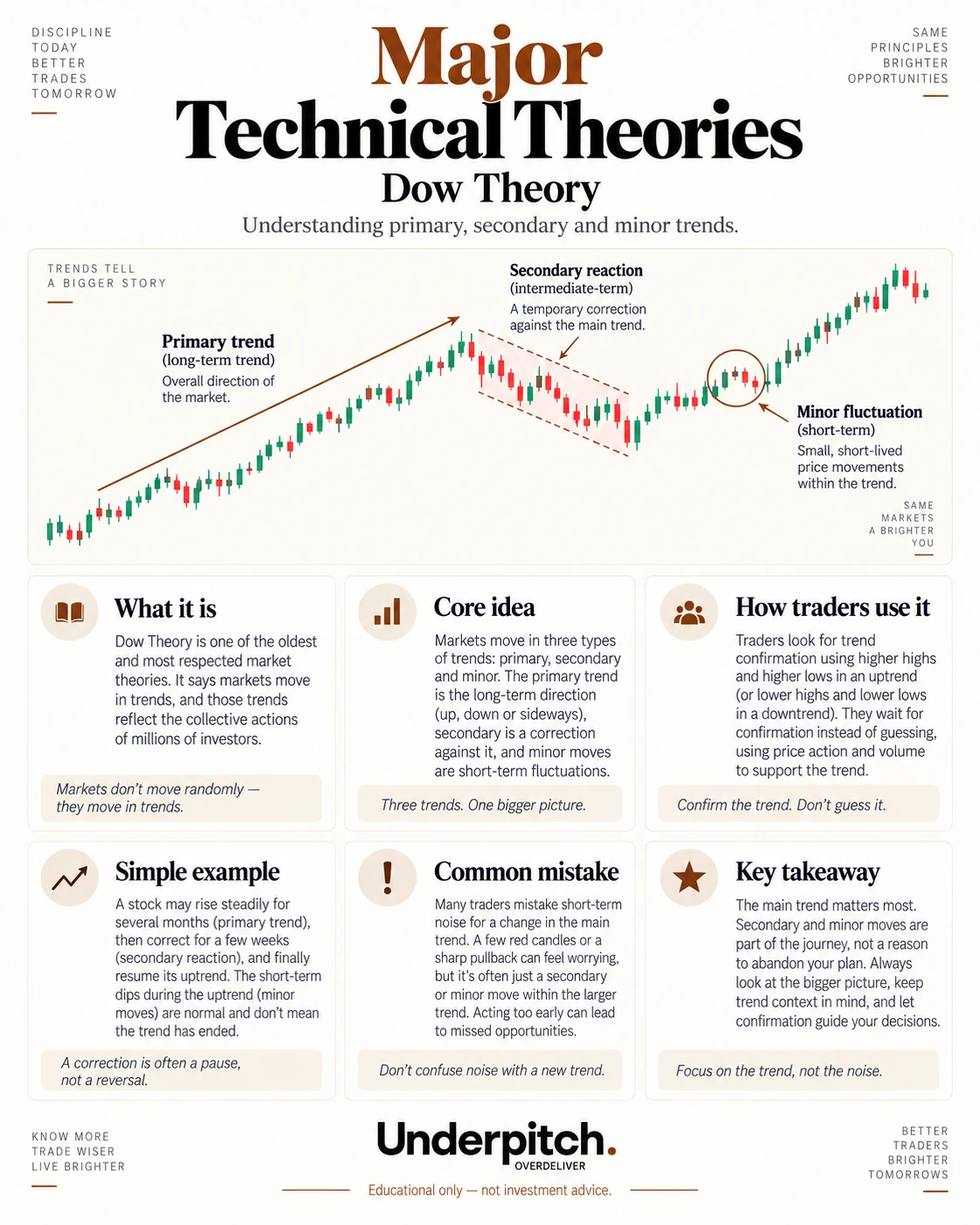
Dow Theory
Markets move in primary, secondary and minor trends. A primary trend is the dominant long-term direction; secondary reactions correct it; minor moves are short-term noise. Trend confirmation and volume are important.
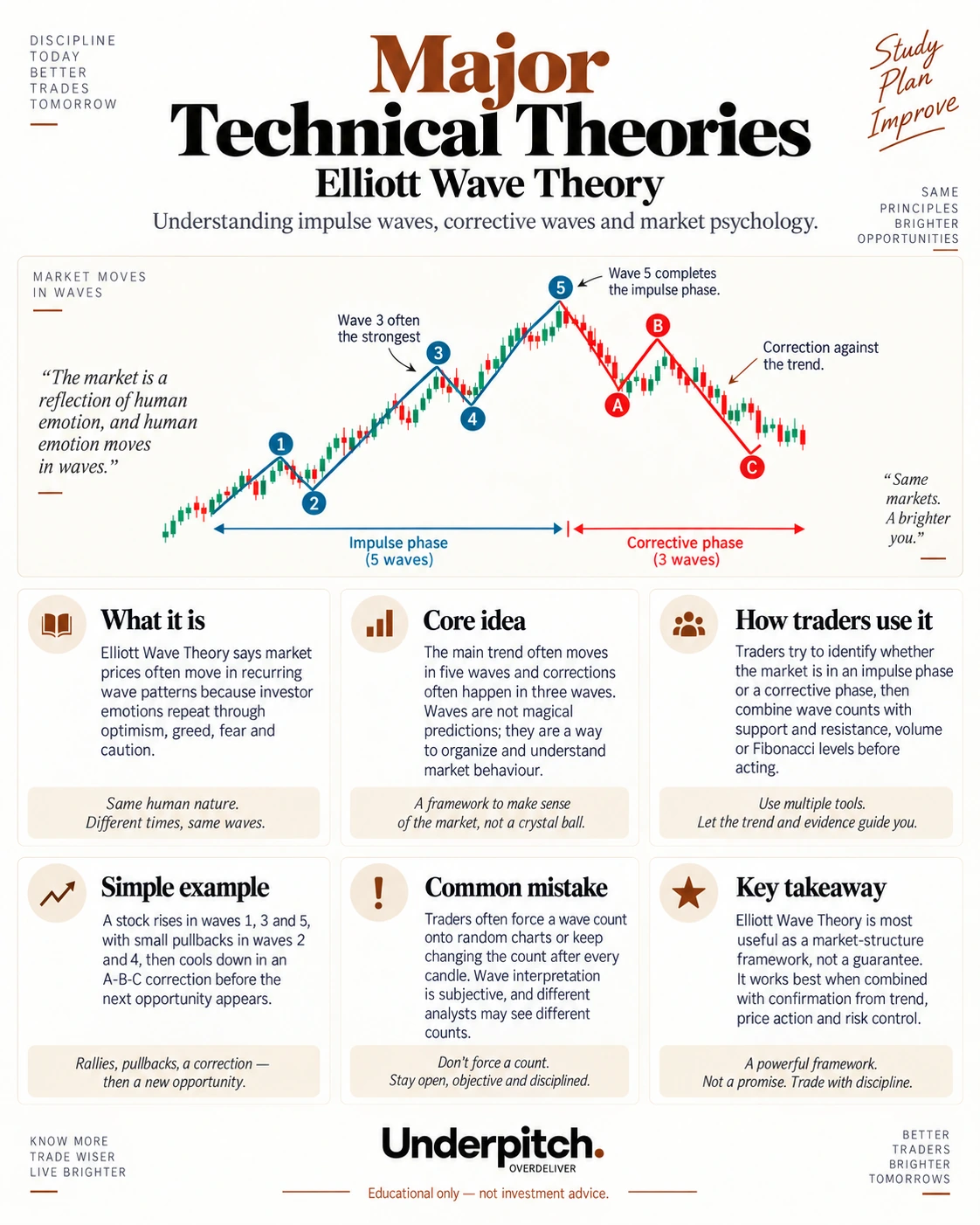
Elliott Wave — 1-2-3-4-5 + A-B-C
The framework describes a five-wave impulse in the main direction followed by a three-wave A-B-C correction. Wave counts are subjective; different analysts can label the same chart differently, so it should be a framework, not a prediction engine.
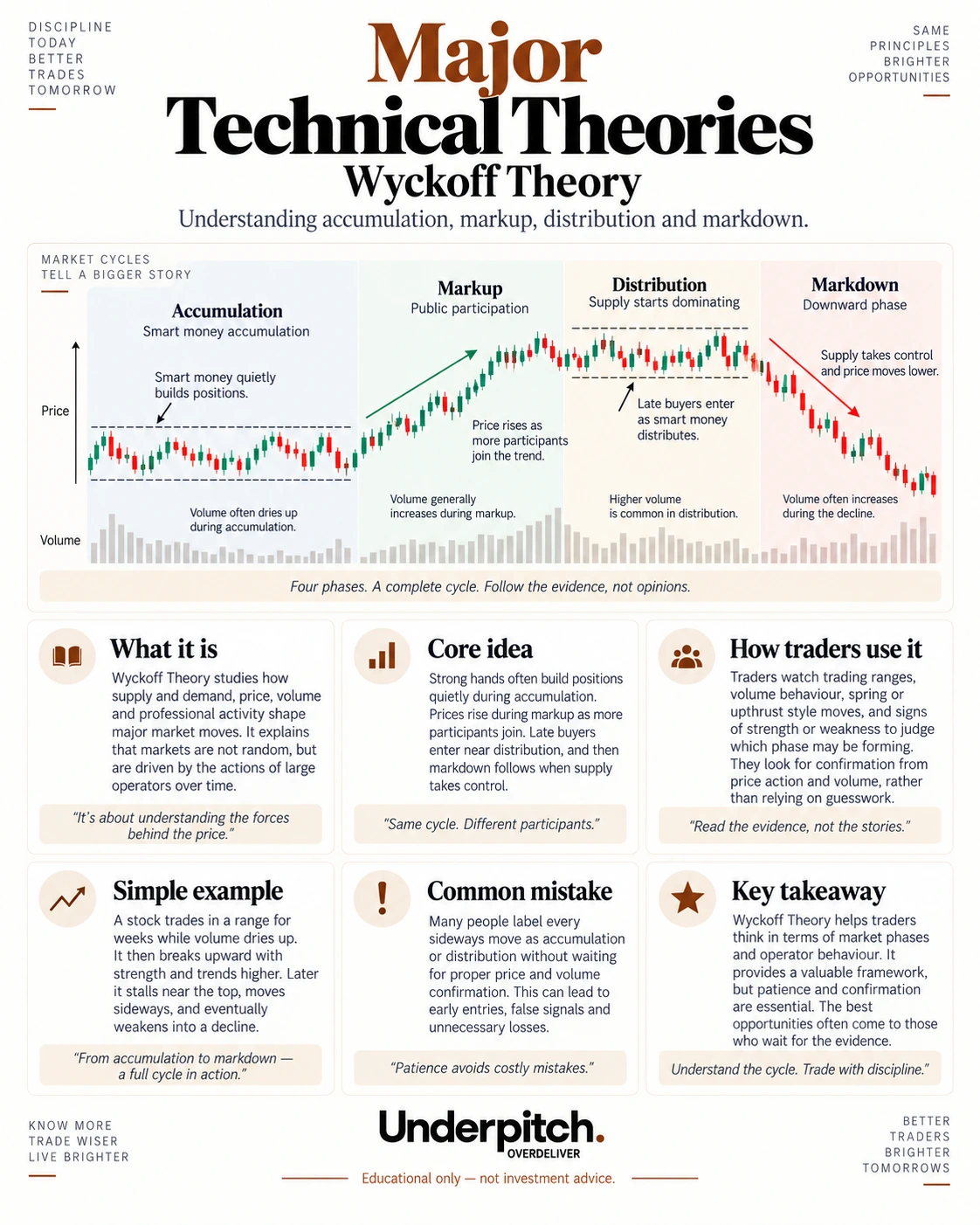
Wyckoff Theory
Focuses on supply/demand, price and volume through accumulation, markup, distribution and markdown phases. Traders watch ranges, springs/upthrusts and volume behaviour to infer whether large operators may be accumulating or distributing.
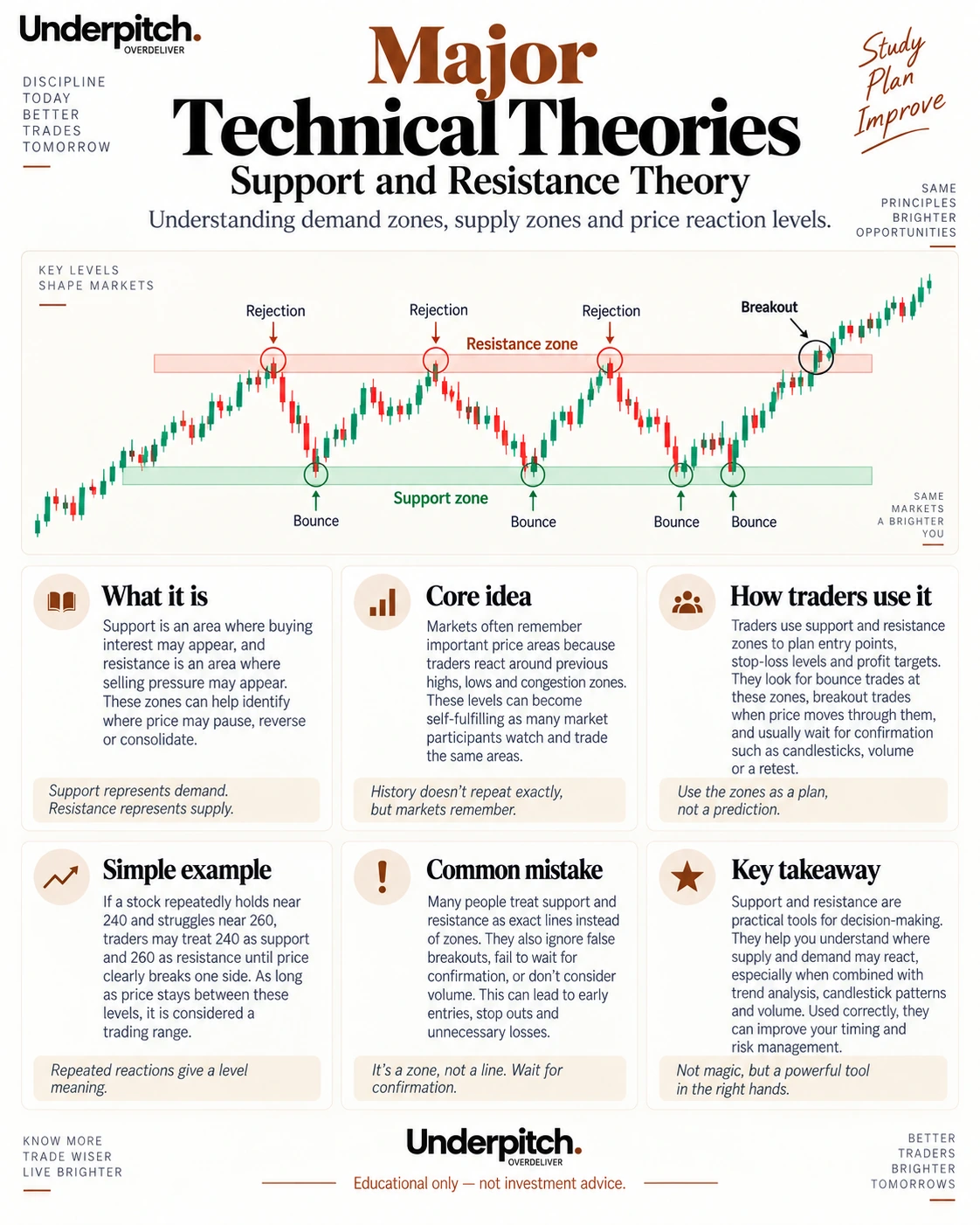
Support and Resistance Theory
Markets often react around previous highs, lows and congestion zones because many participants remember those areas. Zones can self-reinforce, but breaks and false breaks are common.
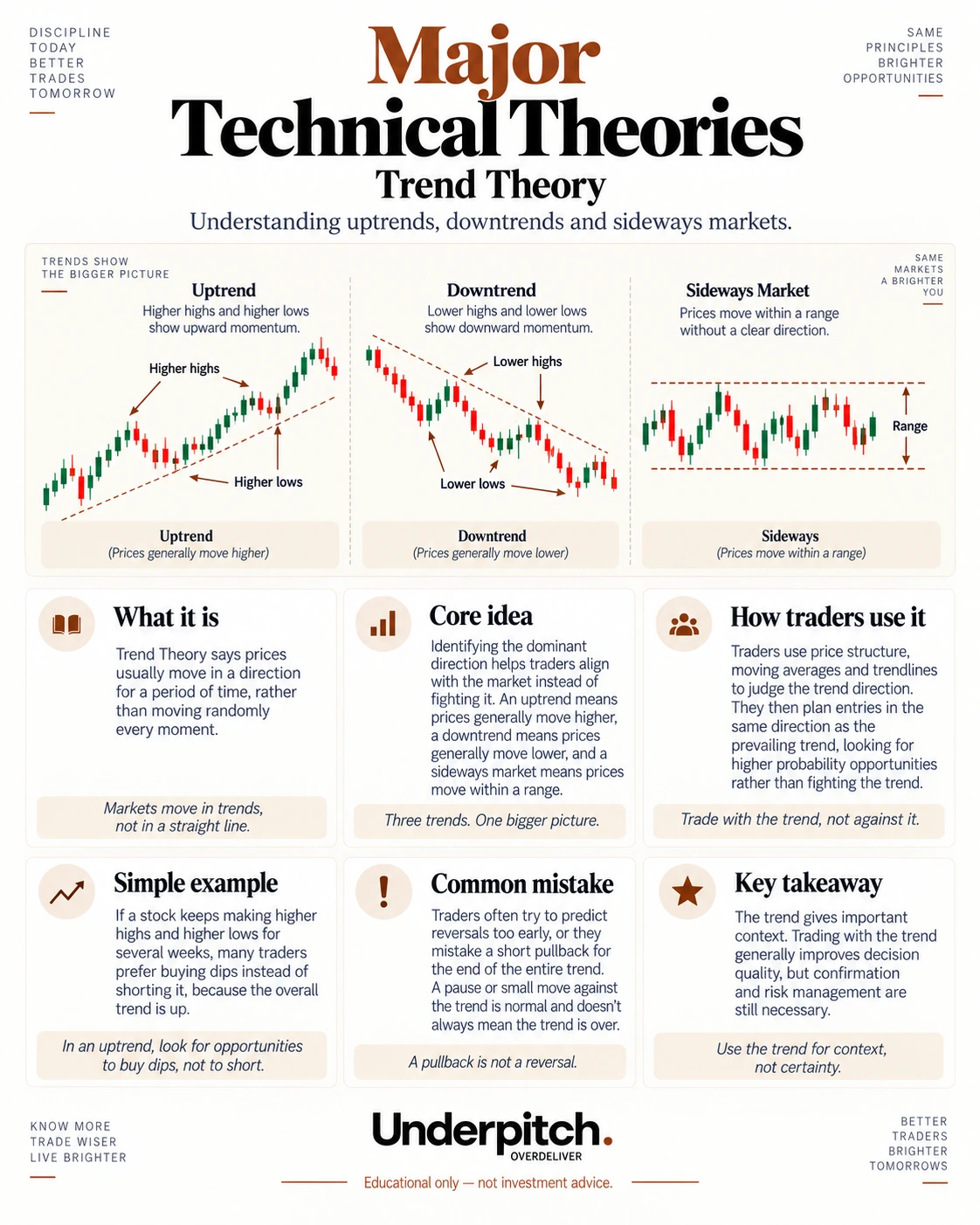
Trend Theory
Price often persists in a direction for a period. Traders classify higher-high/higher-low uptrends, lower-high/lower-low downtrends and sideways ranges, then align strategies with the prevailing structure.
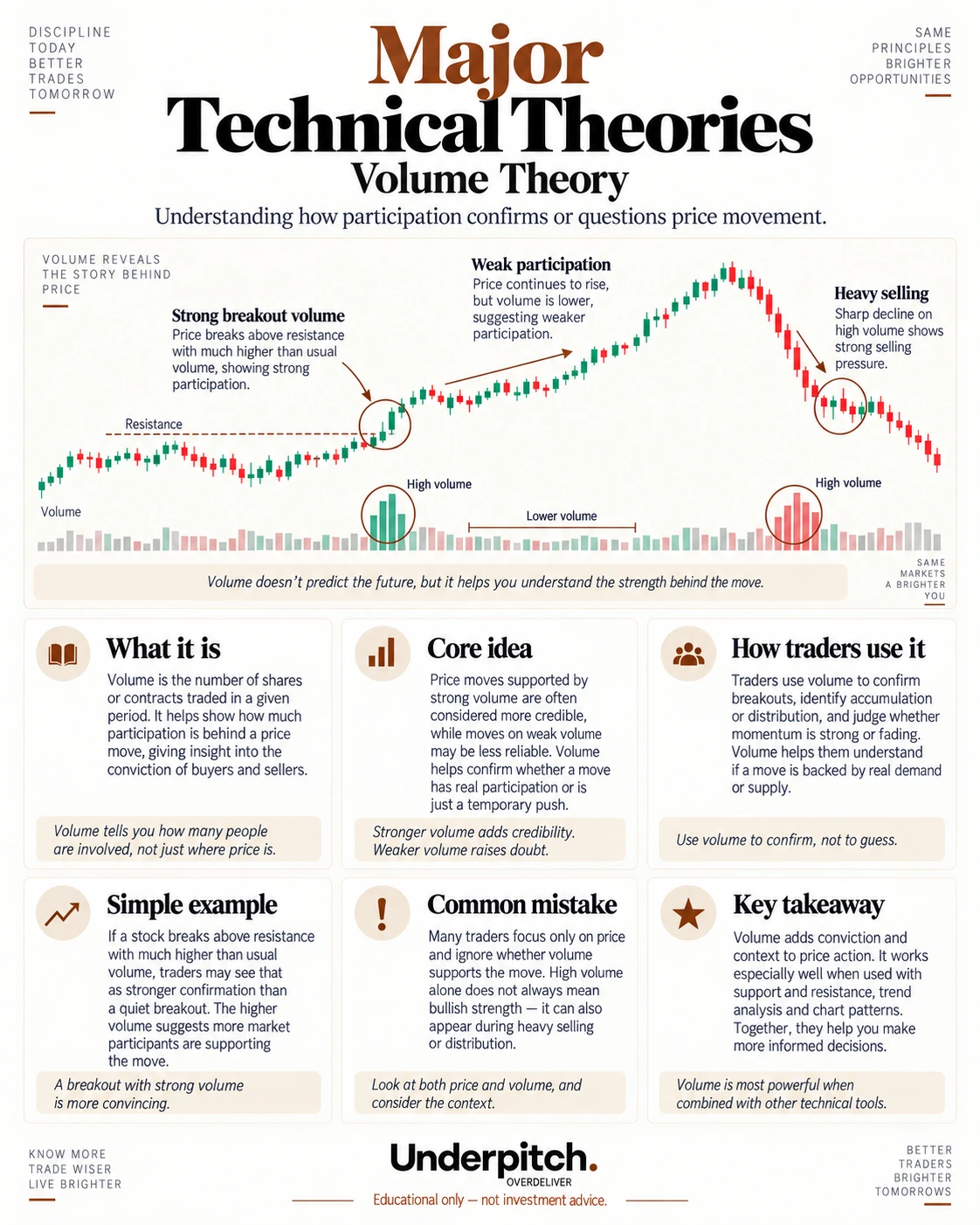
Volume Theory
Price moves supported by stronger participation are often treated as more credible. High volume can confirm buying or heavy selling, so volume must be read together with direction and location.
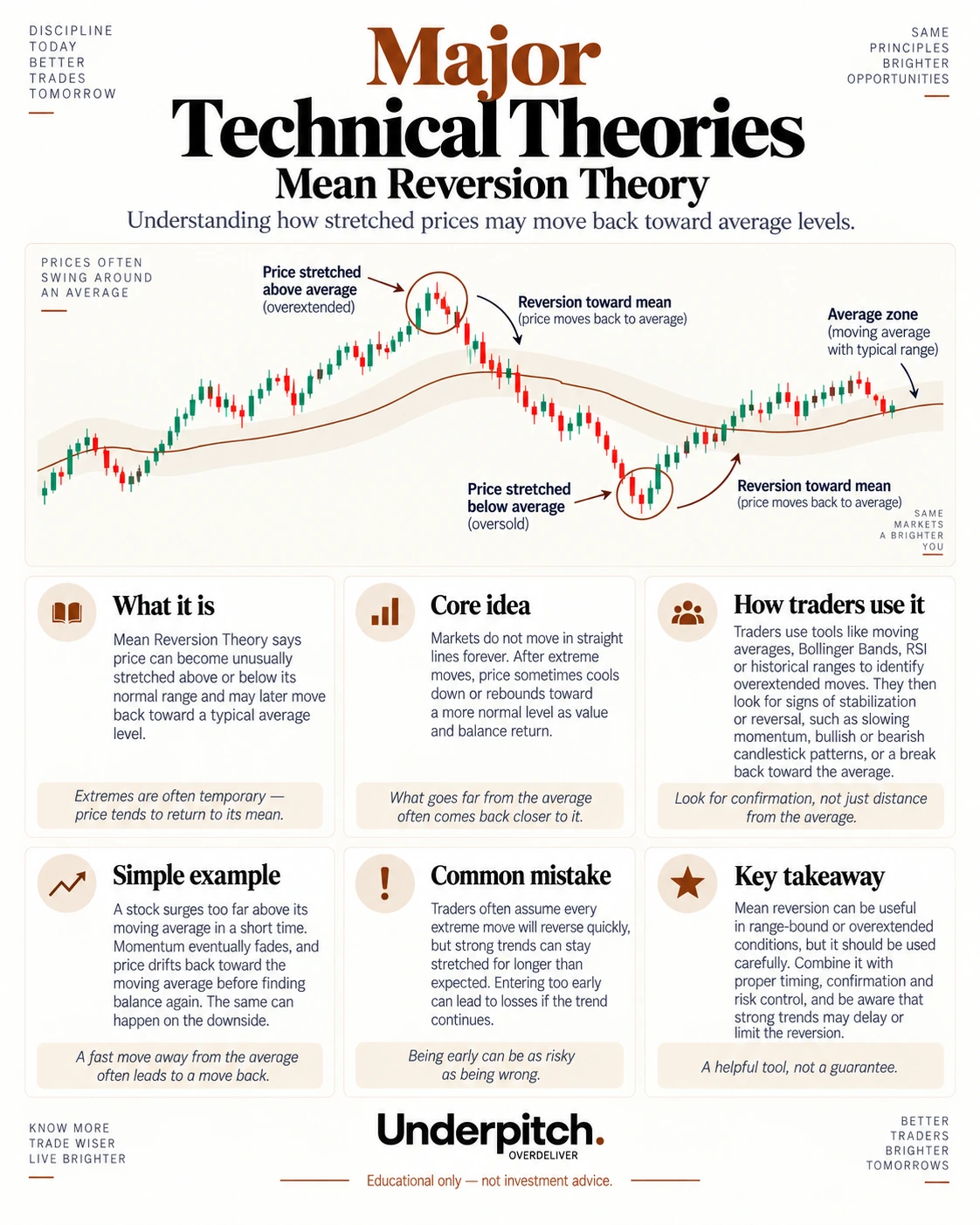
Mean Reversion Theory
After unusually stretched moves, price may move back toward an average or normal range. This is most useful when a market is not in a strong persistent trend; “too far” can become much farther.