Fundamental analysis
How to analyse a company’s business, management, industry, financial performance, valuation, competitive advantage and risks before investing.
What is fundamental analysis?
Fundamental analysis asks a simple question: what is the business economically worth, and is the current market price sensible relative to that value and risk? It studies the business model, industry, management, financial statements, competitive advantage, growth, capital allocation and valuation.
Understand the business before the stock
- What does the company sell and who pays it?
- How does it make money — volume, pricing, subscription, lending spread, transaction fee, manufacturing margin?
- Is demand recurring or cyclical?
- Who are the competitors and what stops customers from switching?
- Does the company need a lot of debt or capital to grow?
Industry and management quality
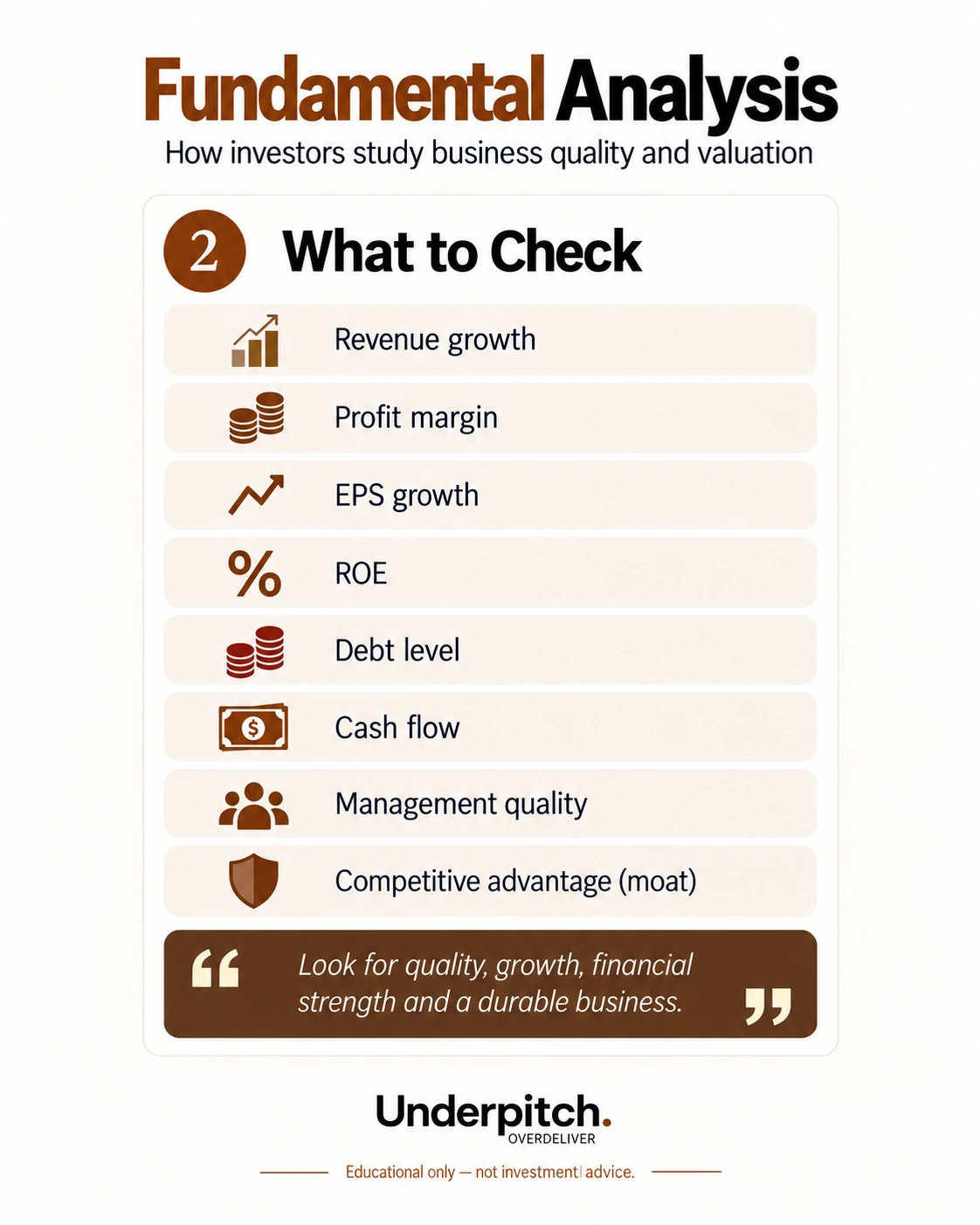
Industry structure can make a good company easier or harder to grow. Study market size, regulation, competition, input costs and cyclicality. For management, look at promoter integrity, governance, related-party transactions, capital allocation, dilution, debt decisions, acquisitions and whether management actions match its words.
Financial performance
Do not judge one quarter in isolation. Study revenue growth, operating margins, net profit, earnings per share, operating cash flow, free cash flow, debt and return ratios across multiple years.
Valuation example
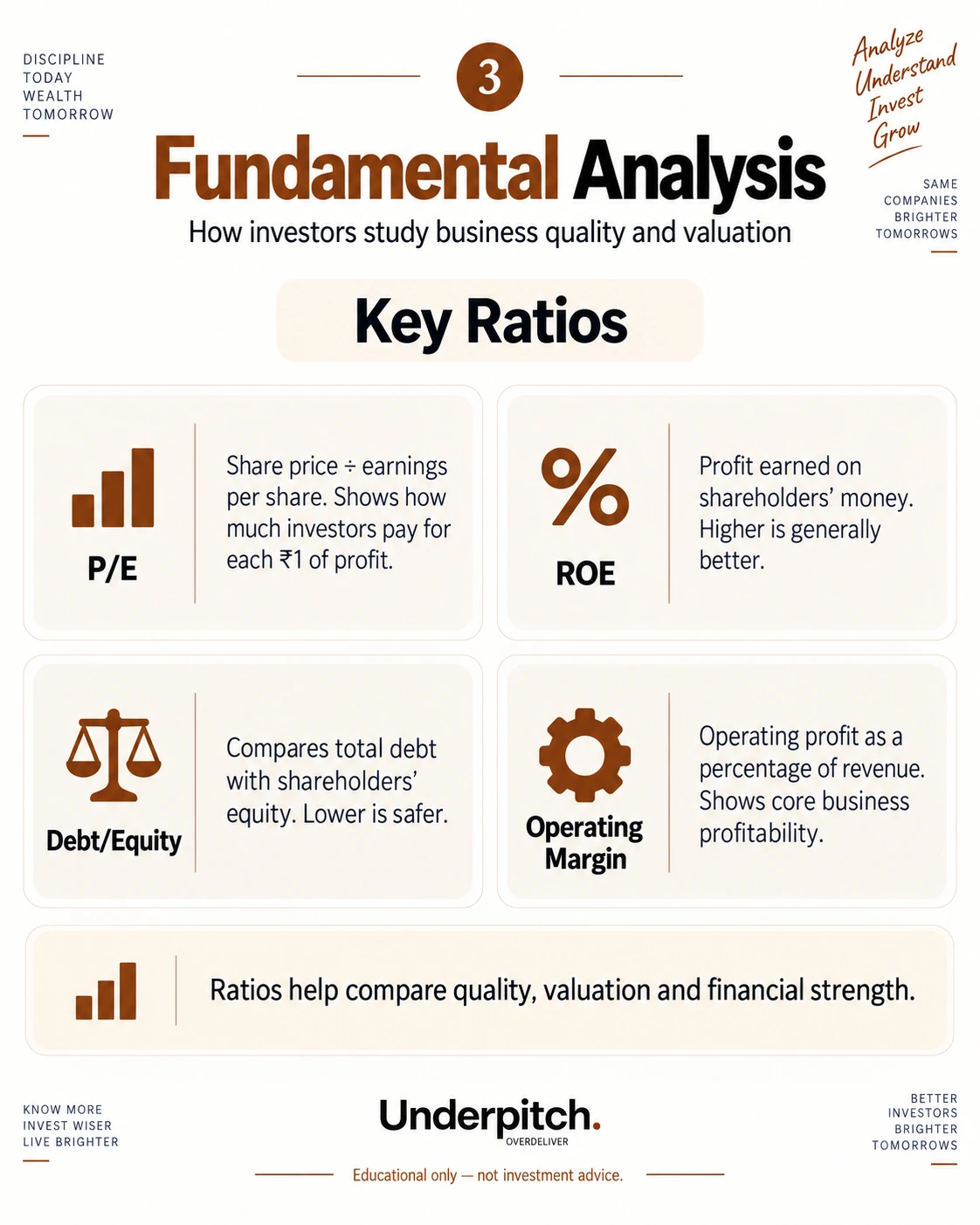
If a company earns EPS of ₹25 and trades at ₹500, its P/E is 20×. That means the market price equals 20 times current annual earnings per share. A 20× P/E is neither automatically cheap nor expensive — compare growth, return on capital, balance-sheet quality, industry economics and peers.
Moat, risks and red flags
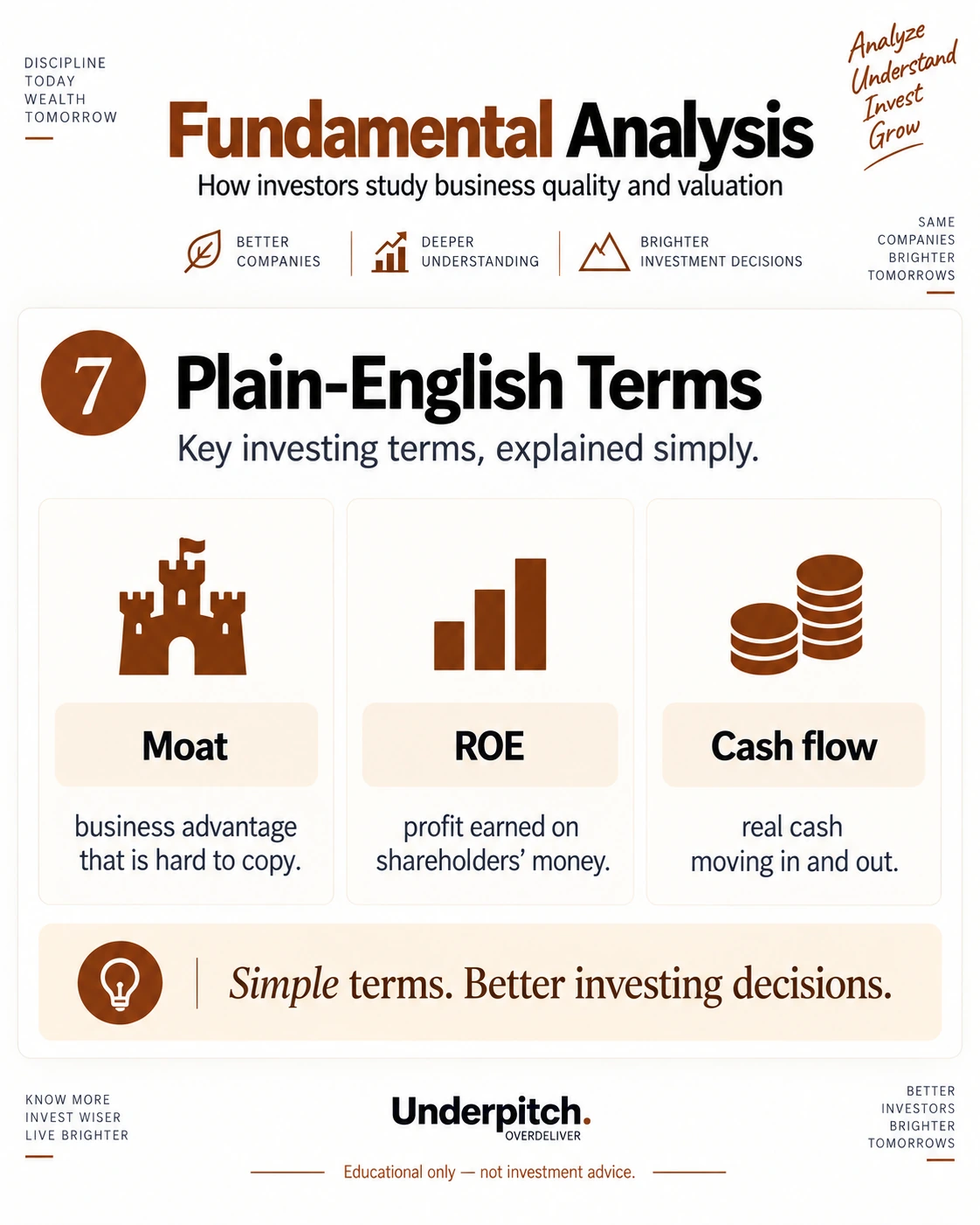
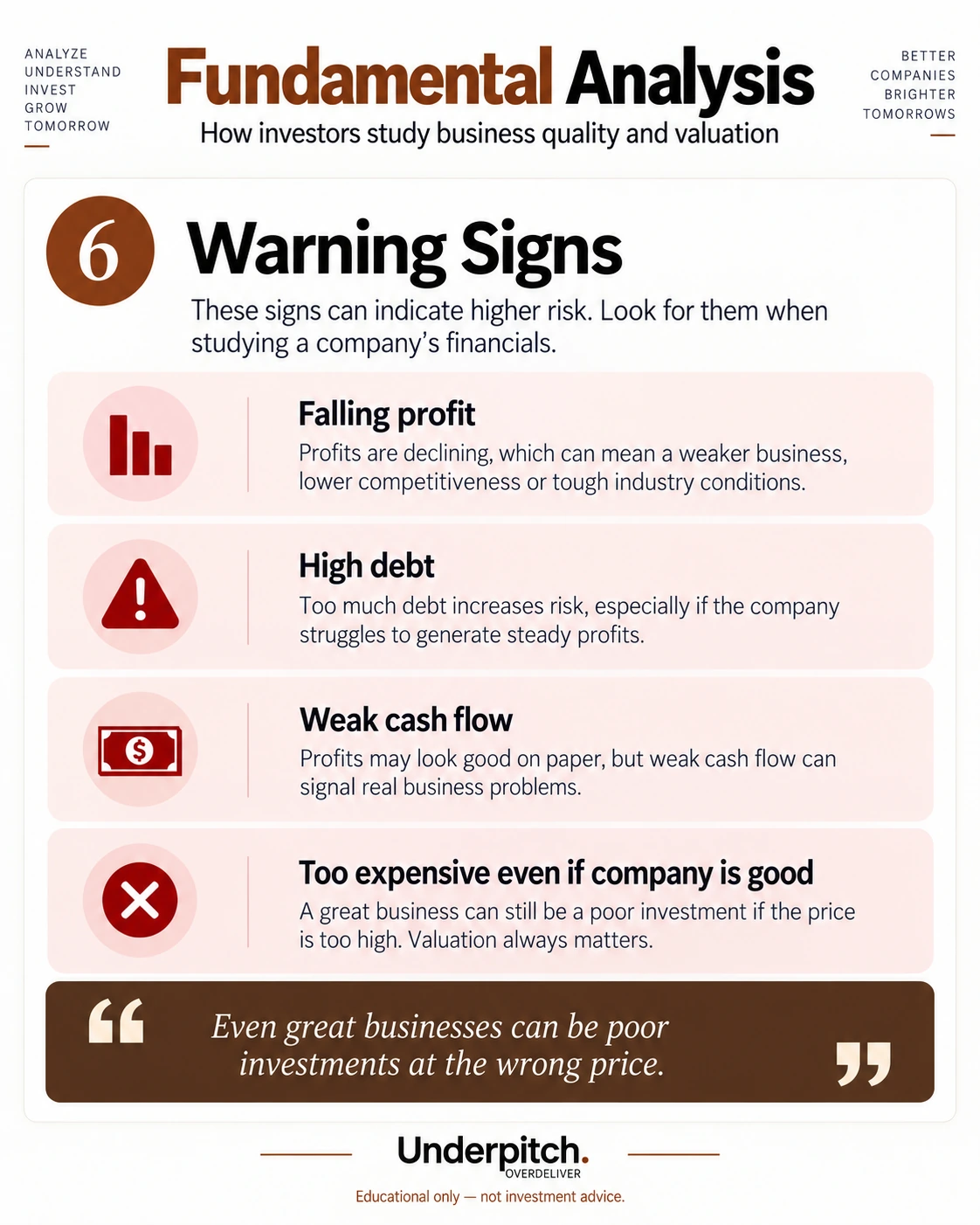
A moat is a durable advantage such as brand, network effects, low cost, switching costs, distribution, intellectual property or regulatory position. Red flags include persistent negative cash flow despite reported profits, rising debt, frequent equity dilution, auditor issues, promoter pledging, unexplained related-party transactions or weakening return ratios.
A practical decision framework
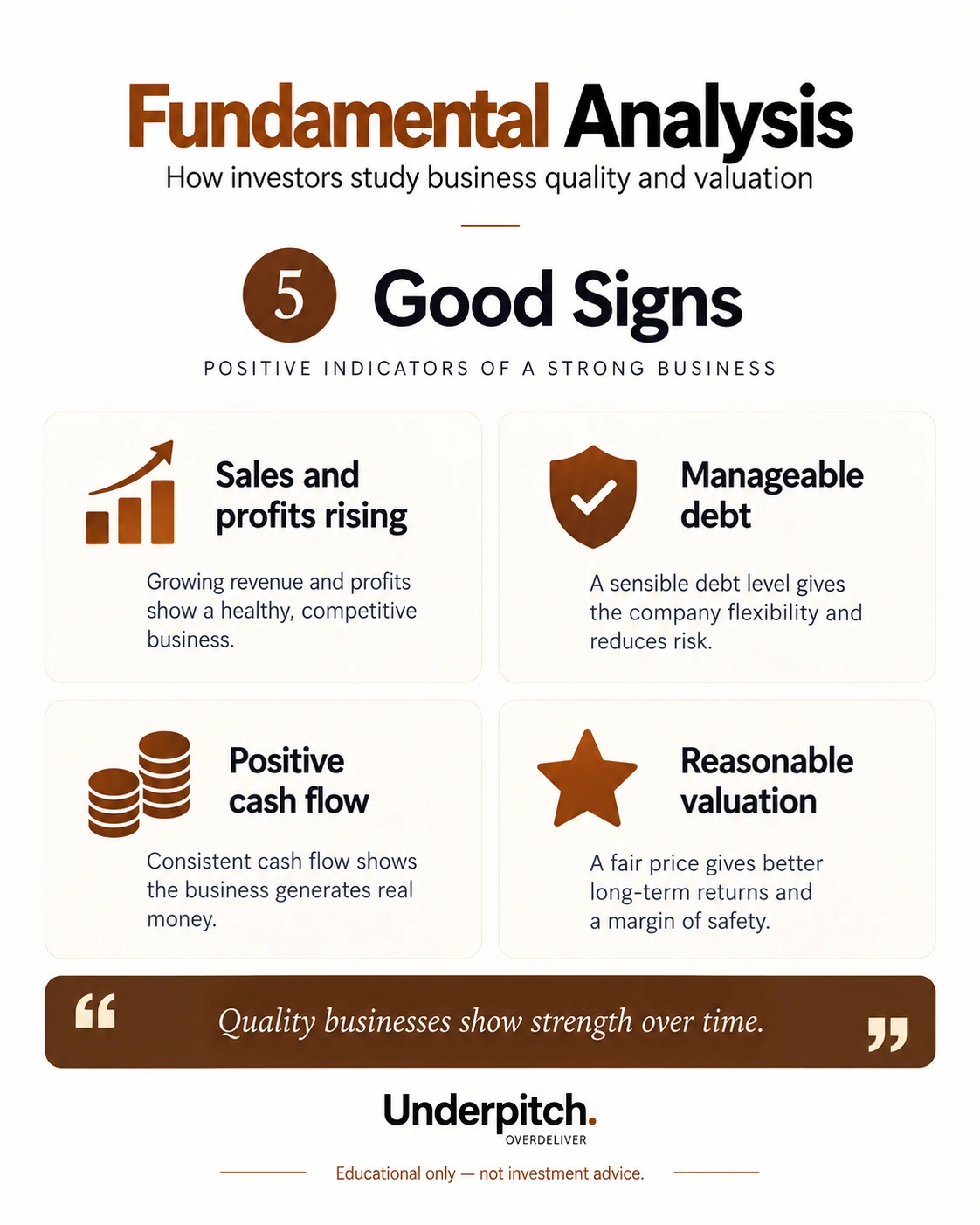
Combine business quality + financial health + management quality + growth runway + valuation + downside risk. A great company can be a poor investment at the wrong price, and a low P/E stock can remain cheap because the business is deteriorating.